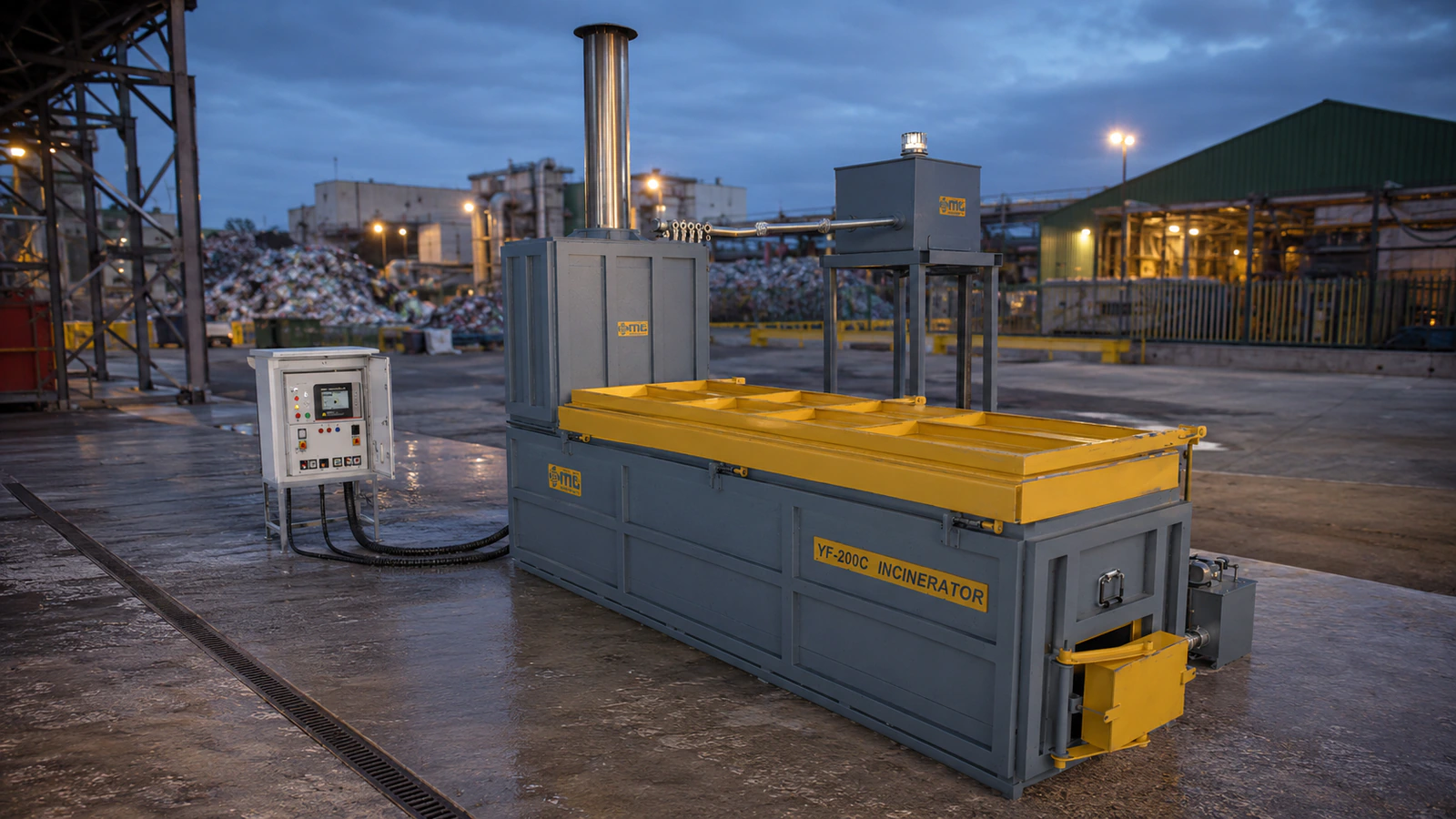
YF-200C
Full automatic dual-combustion thermal disposal system built to MT Makina engineering standards. Features custom emission scrubbers optimized for Garbage Incinerator disposal.
// Controlled Thermal Disposal & High-Temperature Incineration System// SECTORAL GARBAGE AND SOLID WASTE DISPOSAL SOLUTIONS
Versatile Sectoral Application Areas
The incinerators we design offer professional solutions for the needs of different sectors thanks to their versatile structure:
- Municipal Waste & Domestic Garbage: Rapid disposal of solid wastes in urban and residential areas.
- Industrial Waste & Packaging: Disposal of packaging and organic waste from factories and production facilities.
- Campus, Hotel & Residential Managements: On-site and hygienic destruction of waste generated in collective living spaces.
Garbage Incinerator For Controlled High-Temperature Incineration
Emission Standards & Regulatory Compliance
MT Incineration systems fully comply with emission limits specified in European Union Waste Incineration Directives (2010/75/EU) and local environmental legislation. Eco-friendly discharge is guaranteed by our advanced flue gas treatment technologies.
Advanced Industrial Burner Technology
Our incinerators utilize world-class Italian burners from brands like Riello or Ecoflam. Deployed in both primary and secondary (afterburner) chambers, these fully modulating burners automatically adjust flame intensity according to real-time temperature demands.
This process minimizes fuel (Natural Gas, Diesel, LPG) consumption while maximizing thermal destruction efficiency. Flame scanners and safety photocells ensure fail-safe operation cycles.
YF-200C
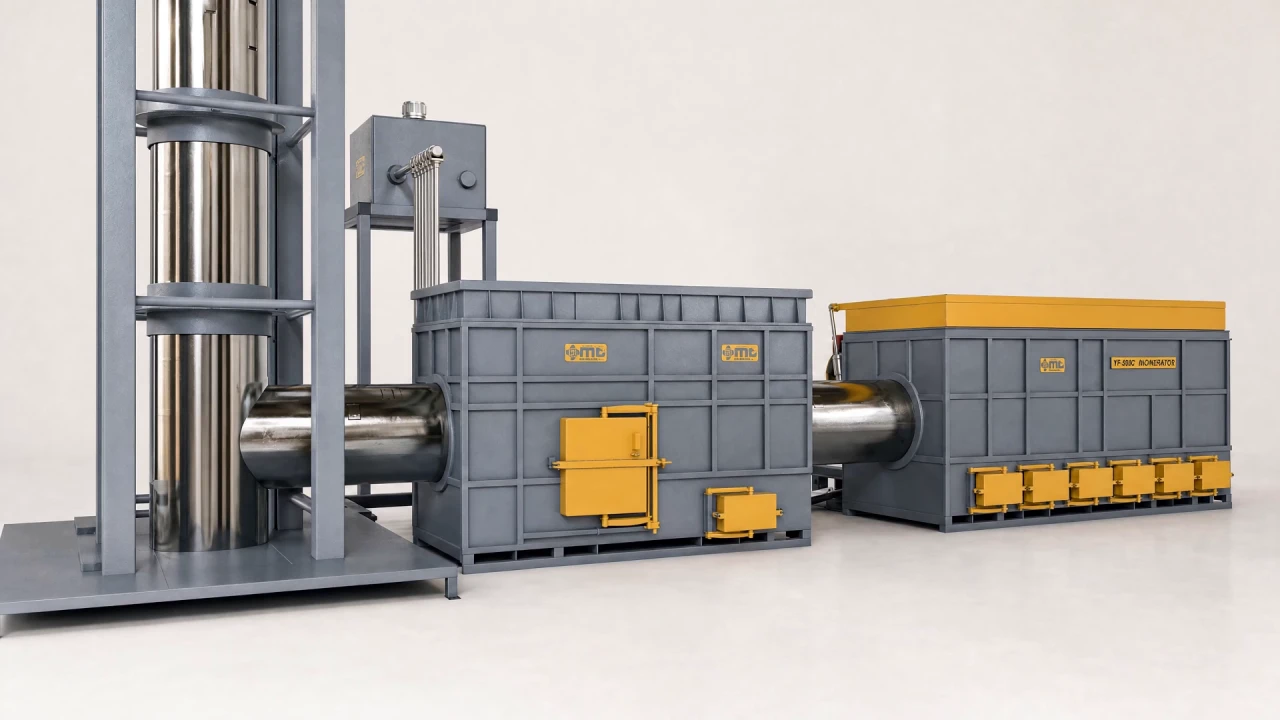
Inspect the mechanical movement in real time.
This interactive operating demo was prepared on the YF-500C garbage incinerator. The appearance, capacity, dimensions and equipment of the YF-200C may differ.
VIDEO SHOWCASE

PRODUCTION & PRODUCT GALLERY
Frequently Asked Questions
Before loading, waste is drained in bunkers or pre-dried with hot air in drying zones. Special primary air distribution nozzles and flame deflectors evaporate moisture rapidly inside the combustion chamber.
Yes. Refuse-Derived Fuel (RDF) is a homogeneous fuel source with high calorific value. Our incinerators can be configured with automated RDF feeding conveyors and metering units for steady-state operation.
A rotary kiln slowly rotates to mix waste, ideal for hazardous solid/liquid wastes. A moving grate system pushes municipal waste across cascading grate steps, maximizing primary air exposure for high-volume sorting-free municipal waste.
High-temperature flue gases vaporize water inside a waste heat boiler to produce high-pressure steam. This steam drives a steam turbine connected to an electrical generator to produce power.
Incineration reduces the volume of solid waste by 95% to 98% and its weight by 90%, minimizing landfill area requirements and extending the lifetime of existing landfill sites.
Analyzers installed on the stack continuously measure CO, NOx, SO2, O2, moisture, dust, and temperature. These data are reported in real-time to local environmental databases to ensure legal compliance.
Negative air pressure is maintained in waste reception halls and bunker areas. The exhaust air is drawn and utilized as primary combustion air in the furnace, thermalizing odor compounds above 850°C.
Bottom ash (slag) can be processed, sorted for metals, and reused as road base construction material or cement additive. Fly ash captured by filters is stabilized and dispatched to secured hazardous landfills.
To maintain efficient operation in our grate and rotary systems, municipal incinerators start from a minimum capacity of 5 tons per day and can scale up to 250 tons per day on a single processing line.
Dry lime (Ca(OH)2) or sodium bicarbonate (NaHCO3) powders are injected into the flue gas reactor. These react with acid gases like HCl and SO2, converting them into neutral salts captured by bag filters.
Explore Other Products
Medical Waste Incinerator
// Capacity: 50 - 1000 kg/h
Controlled dual-chamber disposal systems for hospital, clinical, and laboratory waste. Flue scrubbing optional.
Animal Incinerator
// Capacity: 50 - 1000 kg/h
Hygienic and high-temperature carcass disposal solutions for farms, veterinarians, shelters, and slaughterhouses.
Mobile Incinerator
// Capacity: 20 - 80 kg/h
Containerized, flexible system built for field operations, disaster zones, and remote temporary camps.
High Capacity Incinerator
// Capacity: High Capacity
Continuous duty designs for large industrial waste management facilities and integrated municipal projects.
Heat Cleaning Oven
// Capacity: ATF-50 / ATF-140 Series
Thermal cleaning system designed to remove paint, grease, and coating residue from industrial paint line hangers.
Let's Define the Optimal Incinerator System Together
Our engineering department will prepare a tailored system configuration based on parameters like waste type, volume, and city.