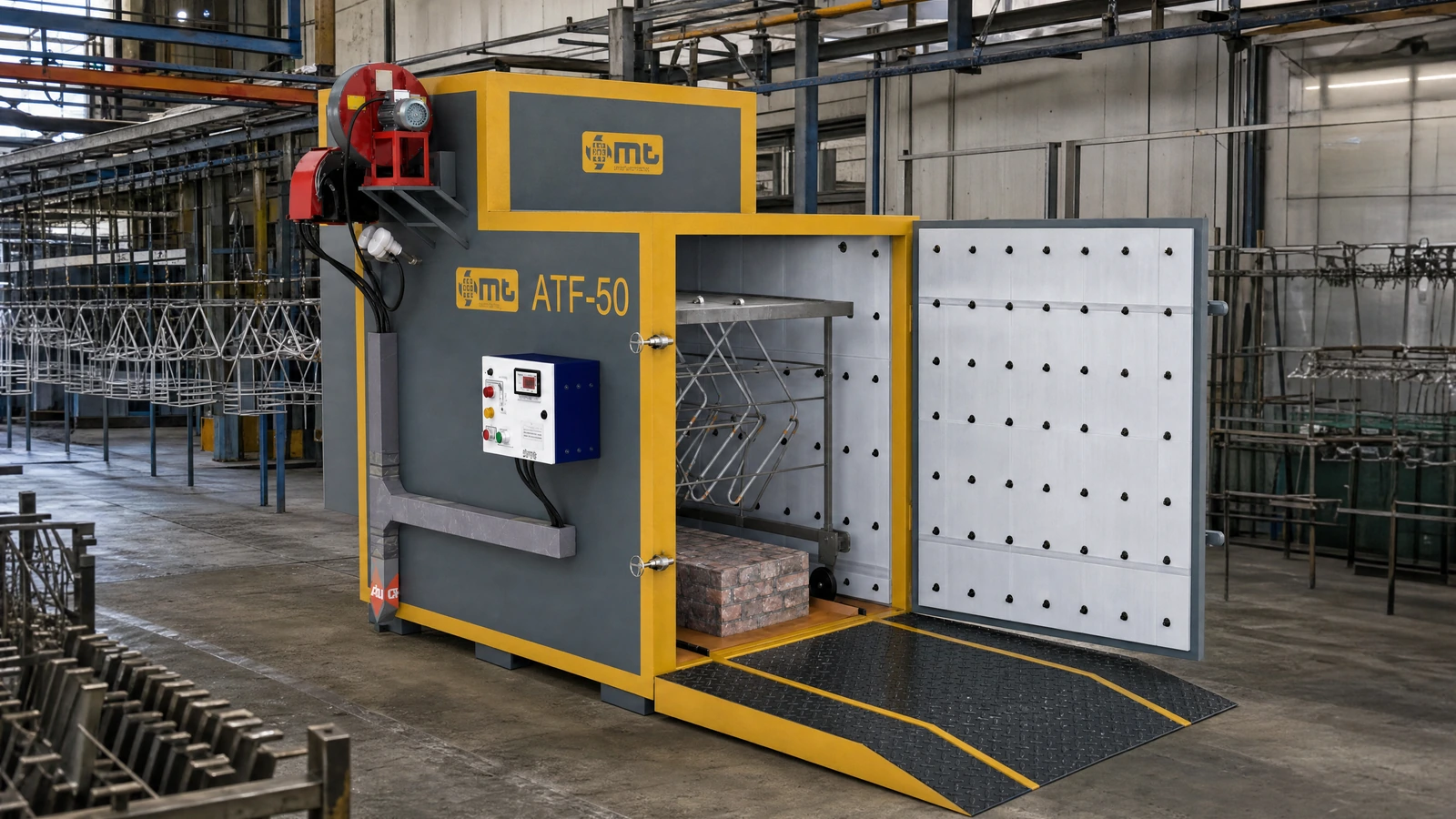
ATF-50
Full automatic dual-combustion thermal disposal system built to MT Makina engineering standards. Features custom emission scrubbers optimized for Medical Waste disposal.
// Controlled Thermal Disposal & High-Temperature Incineration SystemHeat Cleaning Oven For Controlled High-Temperature Incineration
Emission Standards & Regulatory Compliance
MT Incineration systems fully comply with emission limits specified in European Union Waste Incineration Directives (2010/75/EU) and local environmental legislation. Eco-friendly discharge is guaranteed by our advanced flue gas treatment technologies.
Advanced Industrial Burner Technology
Our incinerators utilize world-class Italian burners from brands like Riello or Ecoflam. Deployed in both primary and secondary (afterburner) chambers, these fully modulating burners automatically adjust flame intensity according to real-time temperature demands.
This process minimizes fuel (Natural Gas, Diesel, LPG) consumption while maximizing thermal destruction efficiency. Flame scanners and safety photocells ensure fail-safe operation cycles.
VIDEO SHOWCASE

PRODUCTION & PRODUCT GALLERY
Frequently Asked Questions
Oxygen levels inside the chamber are strictly controlled and limited. Parts are heated up to 400-450°C without direct flame contact, turning organic paint and plastic layers into pyrolysis gas without combustion.
No. Our ovens operate at controlled temperatures of 400-450°C. This level is sufficient to pyrolyze paint but is calibrated to remain well below the tempering temperatures of steel, preserving metal integrity.
In the integrated afterburner chamber at the oven exit, the pyrolysis gases are fully oxidized at 850°C with fresh air injection, converting them into CO2 and water vapor, ensuring zero odor and smoke release.
Heavy jigs and paint hangers are easily arranged on the bogie cart outside the oven. The cart, moving on rails, is pushed into the oven via mechanical or hydraulic pushers, providing safe and effortless loading.
Yes. Insulating resins on stator and rotor windings are thermalized into powder at 400°C. This allows copper winding wires to be easily extracted and recovered without thermal deformation or structural degradation.
The heat cleaning cycle lasts 4 to 6 hours on average, depending on the waste load and material thickness. The internal process temperature is precisely controlled between 400°C and 450°C.
If internal temperatures exceed setpoints, automatic water mist nozzles spray water to depressurize and cool the chamber. Overpressure relief doors are also integrated to release excess pressure safely.
Following pyrolysis, the organic structure of the paint decomposes into a dry powder. The cleaned parts are easily washed with a mild water spray or vibrated to yield a completely smooth metal surface.
Yes. However, burning PVC or nylon releases high concentrations of HCl gas. To safely process these materials, an acid gas neutralisation unit must be added to the thermal cleaning oven stack line.
The oven is fully sealed and lined with 100mm high-density ceramic fiber insulation. This minimizes heat loss, and by utilizing the pyrolysis gas as fuel, primary fuel consumption is reduced by up to 50%.
Explore Other Products
Medical Waste Incinerator
// Capacity: 50 - 1000 kg/h
Controlled dual-chamber disposal systems for hospital, clinical, and laboratory waste. Flue scrubbing optional.
Animal Incinerator
// Capacity: 50 - 1000 kg/h
Hygienic and high-temperature carcass disposal solutions for farms, veterinarians, shelters, and slaughterhouses.
Garbage Incinerator
// Capacity: 100 - 1000 kg/h
High-volume solutions for municipal, campsite, hotel, and industrial facility municipal and organic waste.
Mobile Incinerator
// Capacity: 20 - 80 kg/h
Containerized, flexible system built for field operations, disaster zones, and remote temporary camps.
High Capacity Incinerator
// Capacity: High Capacity
Continuous duty designs for large industrial waste management facilities and integrated municipal projects.
Let's Define the Optimal Incinerator System Together
Our engineering department will prepare a tailored system configuration based on parameters like waste type, volume, and city.