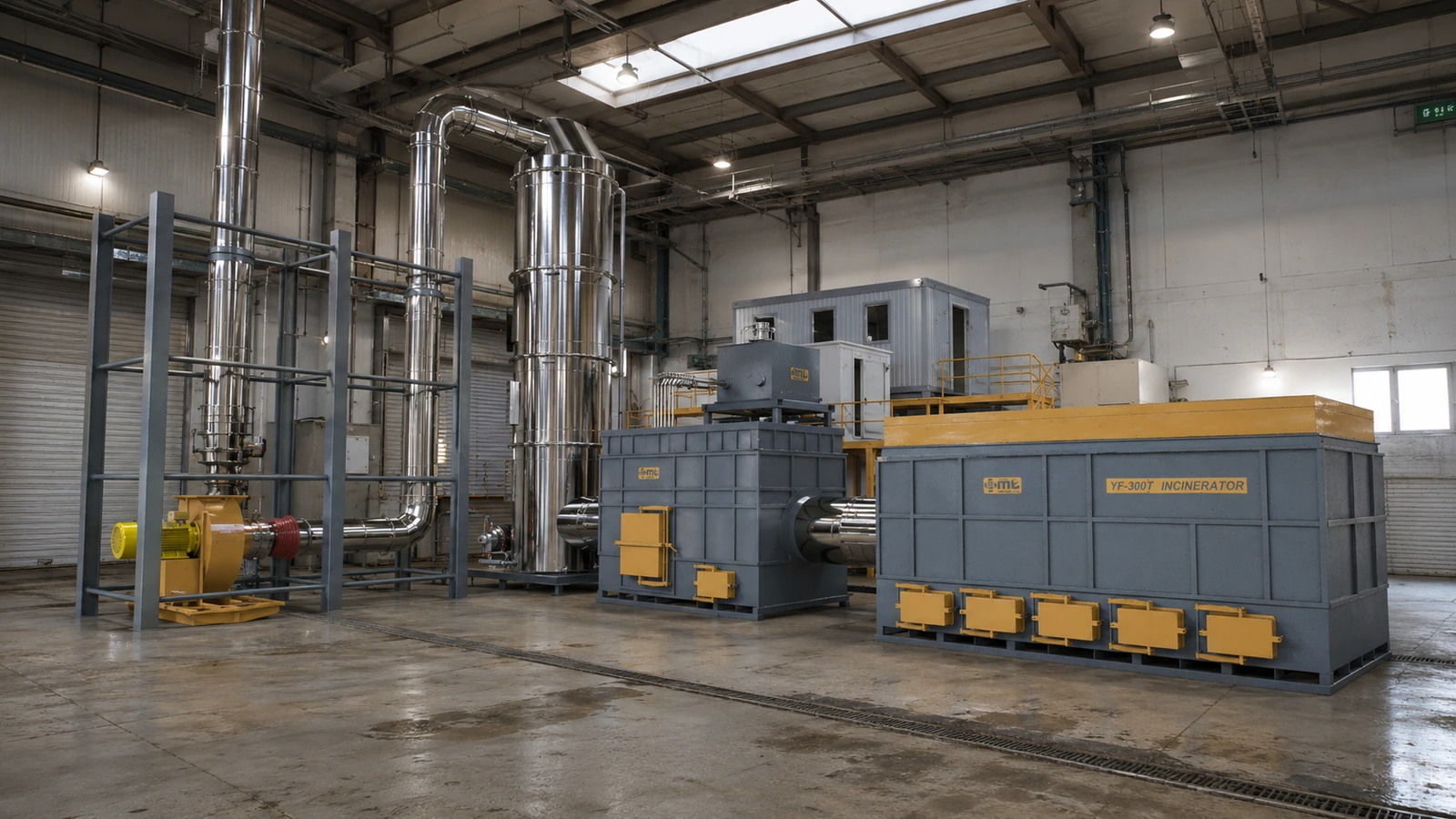
YF-300T
Full automatic dual-combustion thermal disposal system built to MT Makina engineering standards. Features custom emission scrubbers optimized for Medical Waste disposal.
// Controlled Thermal Disposal & High-Temperature Incineration System// SECTORAL USE AND BIOSECURITY STANDARDS
Areas of Use: Where is it used?
- Hospitals & Clinics: On-site disposal of infectious surgical and general medical wastes.
- Laboratories & Pharmacies: Secure disposal of chemical and biological wastes.
- Veterinary & Animal Wastes: Hygienic disposal of pathological wastes and carcasses.
- Dialysis & Biomedical Centers: Rapid management of contaminated single-use materials.
Biosecurity Barrier: Operator Health & Safety
- Prevention of Direct Contact: Physical interaction of operators with pathogenic, sharp, or piercing wastes is completely cut. This is the strongest OHS barrier minimizing the risk of infectious disease spread and work accidents.
- Workforce Optimization: Time and personnel power allocated for manual loading can be shifted to other critical technical processes of the facility as the system becomes automated. This directly increases overall operational efficiency.
Medical Waste Incinerator For Controlled High-Temperature Incineration
Emission Standards & Regulatory Compliance
MT Incineration systems fully comply with emission limits specified in European Union Waste Incineration Directives (2010/75/EU) and local environmental legislation. Eco-friendly discharge is guaranteed by our advanced flue gas treatment technologies.
Advanced Industrial Burner Technology
Our incinerators utilize world-class Italian burners from brands like Riello or Ecoflam. Deployed in both primary and secondary (afterburner) chambers, these fully modulating burners automatically adjust flame intensity according to real-time temperature demands.
This process minimizes fuel (Natural Gas, Diesel, LPG) consumption while maximizing thermal destruction efficiency. Flame scanners and safety photocells ensure fail-safe operation cycles.
YF-300T
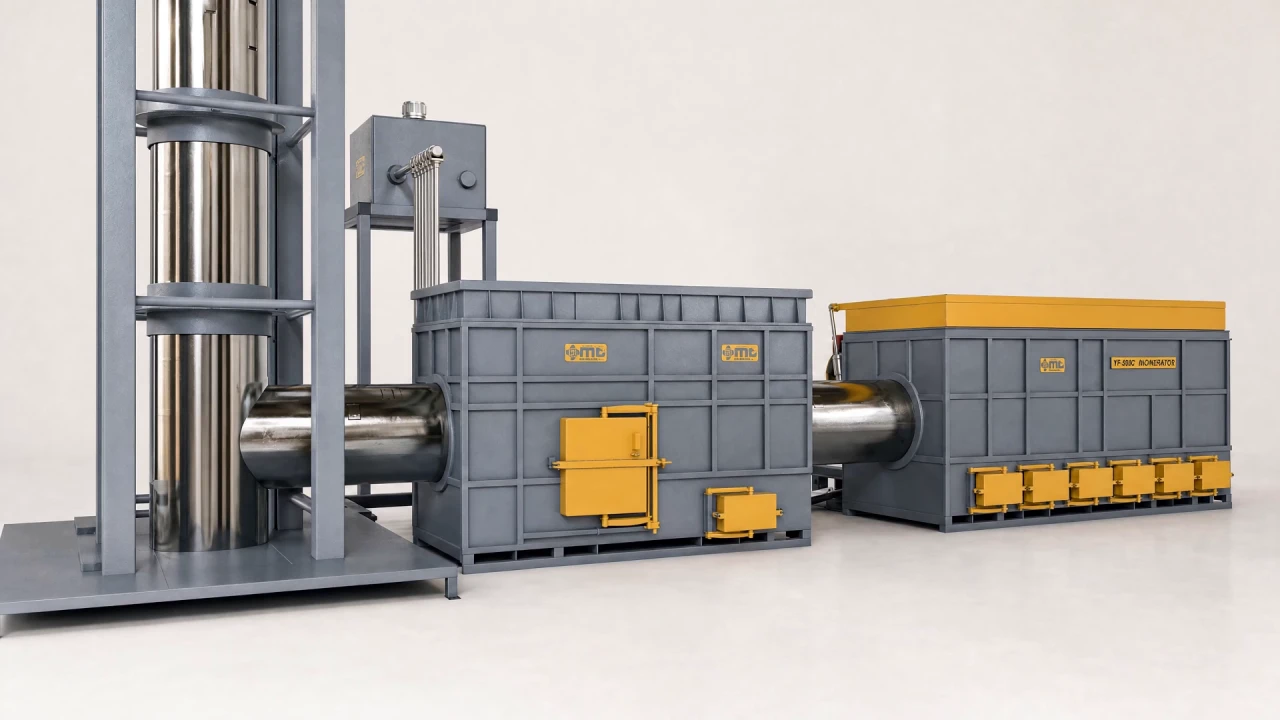
Inspect the mechanical movement in real time.
This interactive operating demo was prepared on the YF-500C garbage incinerator. The appearance, capacity, dimensions and equipment of the YF-300T may differ.
VIDEO SHOWCASE
PRODUCTION & PRODUCT GALLERY
Frequently Asked Questions
Medical incinerators safely burn clinical materials, sharps (syringes, needles), pathology residues, contaminated plastics, dressings, and pharmaceutical remainders under high-temperature cycles.
Gases released from medical waste contain toxic dioxins and furans. To completely break down these compounds into harmless elements, it is a legal requirement to expose the flue gas to a minimum of 1100°C for at least 2 seconds.
Incineration reduces the original waste volume by 95% to 98% and weight by 90% to 95%. The remaining 3-5% sterile ash can be safely disposed of as non-hazardous waste.
Toxic gases are thermally cracked in the afterburner chamber at 1100°C with turbulent oxygen injection. In the filtration line, active carbon injection physically captures any remaining microscopic dioxin/furan molecules.
Our systems feature dry flue gas treatment (lime/sodium bicarbonate injection for acid gases, active carbon) and wet scrubbers. This integration reduces NOx, SOx, CO, HCl, and particulate emissions below statutory limits.
Yes. Special liquid injection nozzles and sludge feed pumps can be integrated. The refractory floor is custom designed to withstand thermal shocks and prevent leakage caused by liquid waste accumulation.
With proper operation and scheduled annual maintenance, the high-alumina refractory brick and castable linings in the kiln last between 3 to 5 years on average. Wear-prone areas can be locally repaired.
According to local Environmental Ministry regulations, an EIA (Environmental Impact Assessment) report, emission permits, and waste disposal licenses must be obtained. MT provides engineering documentation to support licensing.
No. Our high-strength refractory linings and furnace mechanics are resistant to melted metal and glass. These metals melt and mix with the ash, then discharged in a fully sterilized state after the burn cycle.
Yes. The heat from the 1100°C flue gas exiting the secondary chamber can be captured via a waste heat boiler to generate hot water, process steam, or even electrical power.
Explore Other Products
Animal Incinerator
// Capacity: 50 - 1000 kg/h
Hygienic and high-temperature carcass disposal solutions for farms, veterinarians, shelters, and slaughterhouses.
Garbage Incinerator
// Capacity: 100 - 1000 kg/h
High-volume solutions for municipal, campsite, hotel, and industrial facility municipal and organic waste.
Mobile Incinerator
// Capacity: 20 - 80 kg/h
Containerized, flexible system built for field operations, disaster zones, and remote temporary camps.
High Capacity Incinerator
// Capacity: High Capacity
Continuous duty designs for large industrial waste management facilities and integrated municipal projects.
Heat Cleaning Oven
// Capacity: ATF-50 / ATF-140 Series
Thermal cleaning system designed to remove paint, grease, and coating residue from industrial paint line hangers.
Let's Define the Optimal Incinerator System Together
Our engineering department will prepare a tailored system configuration based on parameters like waste type, volume, and city.